.avif)
How the Talent Review Process Shapes Actor Shortlists and Final Casting Decisions

Modern casting involves multiple reviewers, tight production schedules, and hundreds of talent submissions. A structured talent review process helps casting teams evaluate every candidate consistently while keeping communication organized and decision-making transparent. With clear workflows in place, production teams can spend less time managing logistics and more time identifying the right talent for each role.
The First Layer: Submission Screening
Casting teams narrow submissions to fit the job requirements, availability and production context before creative evaluation starts. This initial phase eliminates misalignment in the cycle. The organized casting approval workflow will further guarantee that this screening is conducted systematically. It means casting teams can concentrate on the viable candidates instead of losing time revisiting avoidable mismatches.
Internal Casting Reviews and Role Fit
There are usually several submissions that casting directors review until an initial shortlist is created. Their assessment is based on performance nuance, tone flexibility, and does not rely on the surface-level effects. A structured talent review process helps teams compare performances fairly, ensuring decisions are based on role suitability rather than first impressions or inconsistent evaluation methods.
Building the First Shortlist
Shortlisting is rarely about selecting the most dramatic performance. It entails the trade-off between consistency, interpretive clarity and production realities. Clear visibility into the shortlisting process helps production leaders understand how decisions are made without interrupting the work of the casting team.
The Role of Collaboration in Review Stages
Casting is collaborative in nature. Directors, producers, and agents all contribute perspective during review. Without a centralized system, valuable feedback can become difficult to track. A structured casting approval workflow keeps comments, recommendations, and updates together so every reviewer works from the same information.
Feedback Cycles That Strengthen Decisions
Callback performances, chemistry reads, and revised interpretations often influence final decisions. A structured review process ensures every update is documented and considered within the broader evaluation.
Producer Visibility Without Operational Overload
Producers need clear insight into project progress without managing every day-to-day task. A centralized producer dashboard provides visibility into approvals, timelines, and review stages, allowing leadership to make informed decisions when needed.
Avoiding Bottlenecks in Final Approvals
The delay of approval usually interrupts casting momentum rather than creative disagreement. Projects are stopped when the decision paths are uncertain. An effective casting approval workflow clarifies the chain of command and responsibility and makes sure that materials flow forward without creating friction and needless follow-ups.
AstraLynk and Structured Review Environments
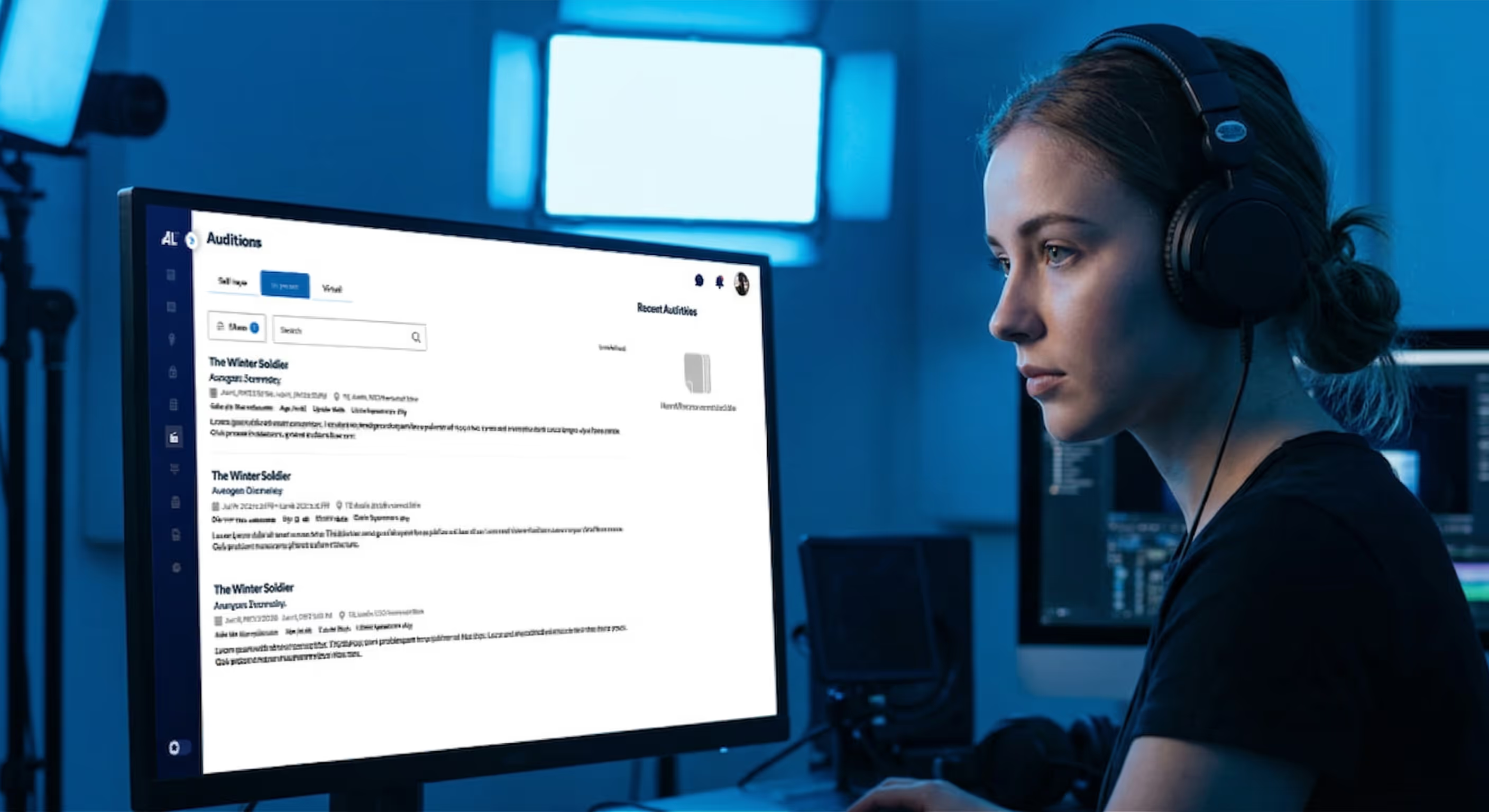
AstraLynk brings casting collaboration, evaluations, secure communication, and document management into one platform. By supporting a structured talent review process, it helps casting teams, producers, and agents stay aligned throughout every stage of the production.
Data-Supported Final Decisions
Final casting decisions often consider factors such as reliability, responsiveness, and previous collaboration alongside audition performance. Bringing this information together in a producer dashboard gives decision-makers a more complete picture while supporting consistent and transparent evaluations.
Preserving Creative Integrity Through Process
Structure does not restrict creativity. It safeguards it. When workflows are defined, casting teams take less time to coordinate and more time to evaluate performance. The clarity of the casting approval workflow will guarantee that decisions are not rushed and made hastily.
Conclusion
A structured talent review process helps casting teams make fair, efficient, and well-informed decisions throughout every stage of production. By combining organized workflows, transparent collaboration, and clear approval processes, production teams can improve efficiency while ensuring creative decisions remain thoughtful, consistent, and aligned with project goals.
The evaluation systems should be transparent, collaborative and consistent to improve casting outcomes. Critical reviews decrease doubts, enhance accountability, and contribute to the making of decisions with confidence at each level. This is the long-term worth of a rigorous talent review process.






.avif)


.avif)


.png)