.avif)
What Every Actor Should Know About the Modern Casting Process

Auditioning often feels like sending your best work into the unknown. After recording a self-tape and submitting it, many actors wonder what happens next. Understanding the casting process can help you prepare with greater confidence, make stronger creative choices, and focus on what helps you get noticed. The more you understand how casting teams evaluate performances, the better prepared you can be to ace the audition and get the part.
What Happens After a Self-Tape Is Submitted
After an actor has sent an audition tape, it goes into the audition review process, where various issues come into play with regard to the perception of the submission. Authenticity of the performance, clarity of emotions and fitting the character are all factors that add to the perception of the audition.
The actors who are aware of this casting process tend to prepare in a more strategic way. They do more than memorize their lines. They spend time in rehearsal, explore their character's motivations, and make intentional performance choices.
This awareness assists the performers in having more focused and confident auditions.
Why Clear Performances Stand Out
The reviewers do not have much time to watch a large number of submissions in most casting settings. For this reason, clarity becomes very crucial during the talent review process.
Actors who perform character intentions rapidly and naturally tend to make a stronger impression. Clear emotional beats, believable reactions, and natural pacing help the reviewers relate to the performance.
Learning the mechanics of the talent review process, actors can prepare the auditions in a way that will allow the performance to be more easily followed.
In spite of the fact that performance is the most significant factor, technical quality may also be taken into consideration during the process of talent review. The ease of evaluation of a performance depends on lighting, framing, and the audibility of sounds.
Those actors whose self-tapes are clean and professional enable the reviewer to concentrate on the acting and not on distractions. Minor requirements, like keeping the eye lines straight and clear audio, can make a big difference.
These types of presentation choices will assist in making sure that the work of the actor is experienced as intended. Clear performances help casting professionals focus on your acting rather than distractions, giving you a better opportunity to make a memorable impression.
Preparation Creates a Stronger Impression
Actors who prepare carefully often perform more confidently during auditions. Knowledge of the audition review process motivates the performers to take more time to experiment with the character motivation and emotional changes in the character prior to recording. Consistent rehearsal helps actors develop performances that feel authentic and emotionally connected instead of rushed. Taking time to work on your craft allows you to approach every audition with greater confidence and deliver your strongest performance.
How AstraLynk Helps Actors Stay Organized for Every Audition
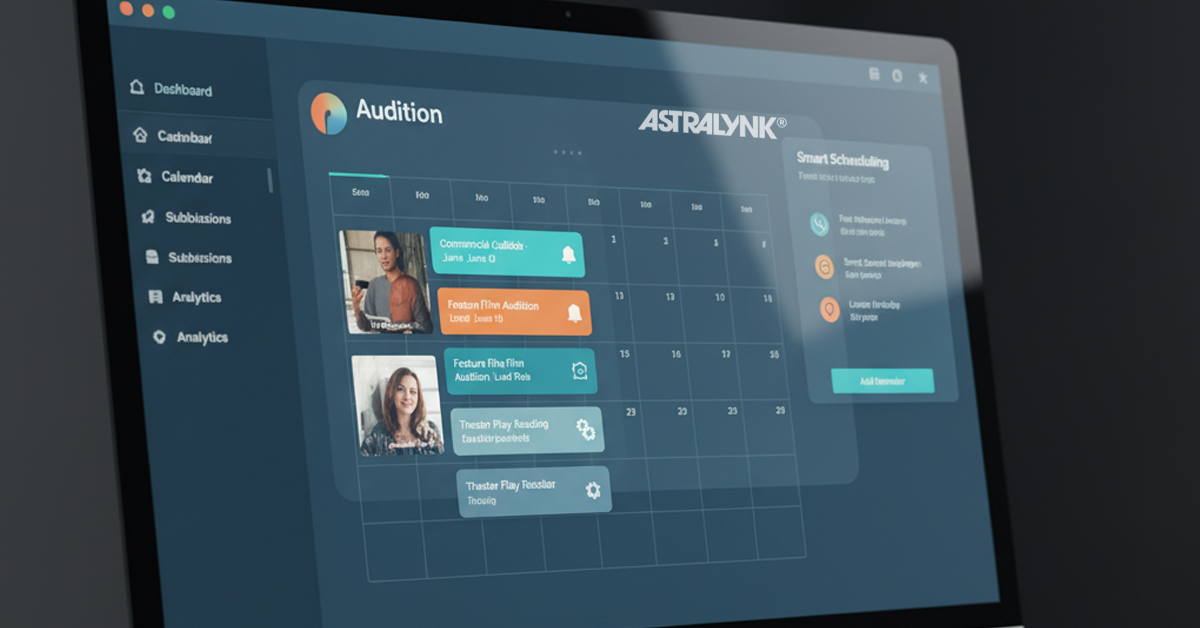
Professional actors may find it complicated to organize their self-tapes and submissions on various platforms. AstraLynk gives a systematic environment where performers will be able to organize their materials, track their work, and keep a professional presence.
AstraLynk provides actors with an organized and efficient way of navigating this constantly changing talent review process in contemporary casting rooms, where the talent preparation and professional materials come under the same system.
This form of structure enables the performers to put more energy into the performance rather than on scattered tools.
Conclusion
Understanding the casting process helps actors prepare with purpose and confidence. By focusing on thoughtful rehearsal, clear presentation, and strong creative choices, performers can give themselves the best opportunity to impress casting agents and stand out during auditions. While no actor can control every casting decision, consistent preparation and a well-organized approach can help you get noticed, get the part, and continue building your career one audition at a time.





.avif)


.avif)


.avif)
.png)