.avif)
Why Actors Are Done Managing Their Career From Five Different Apps
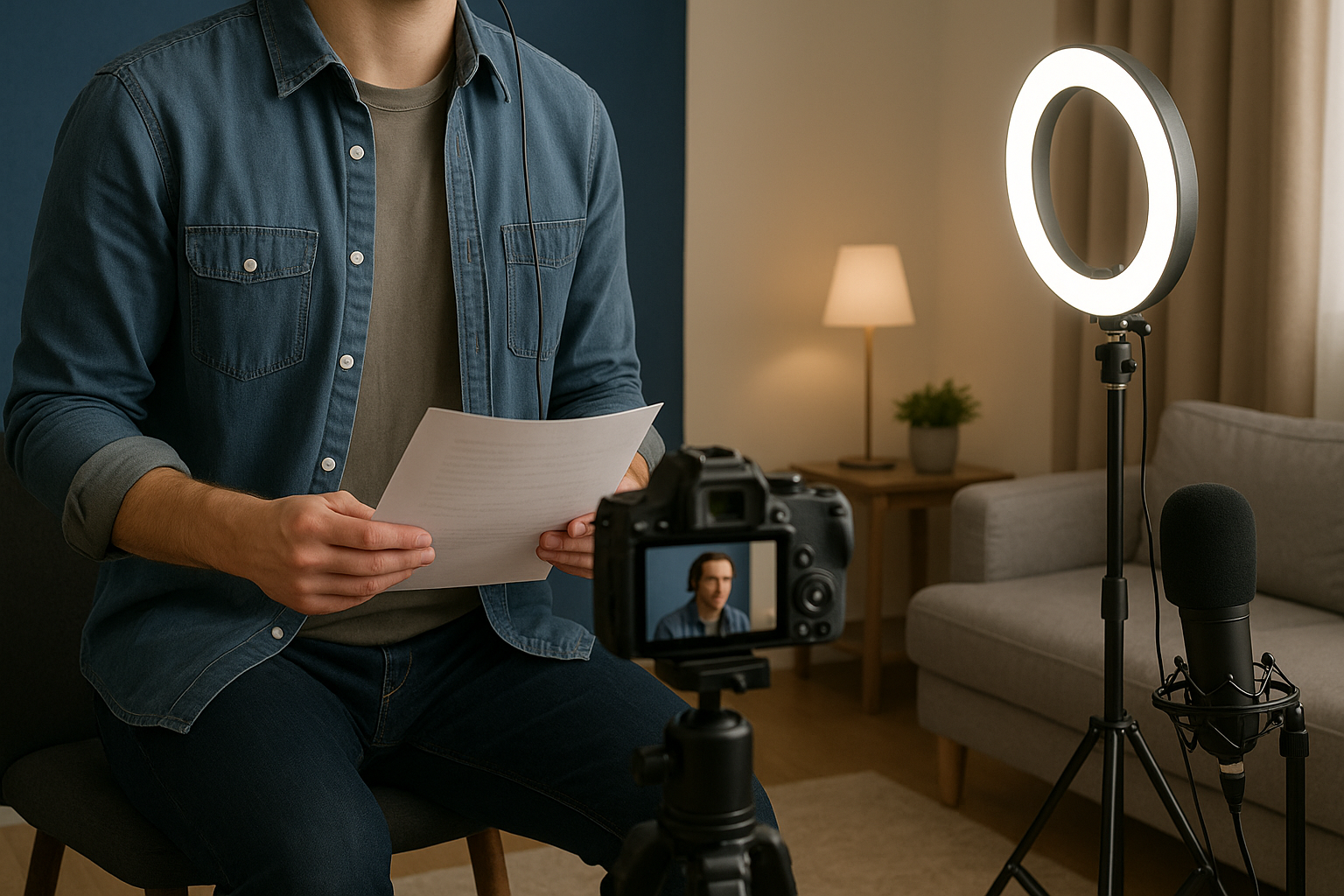
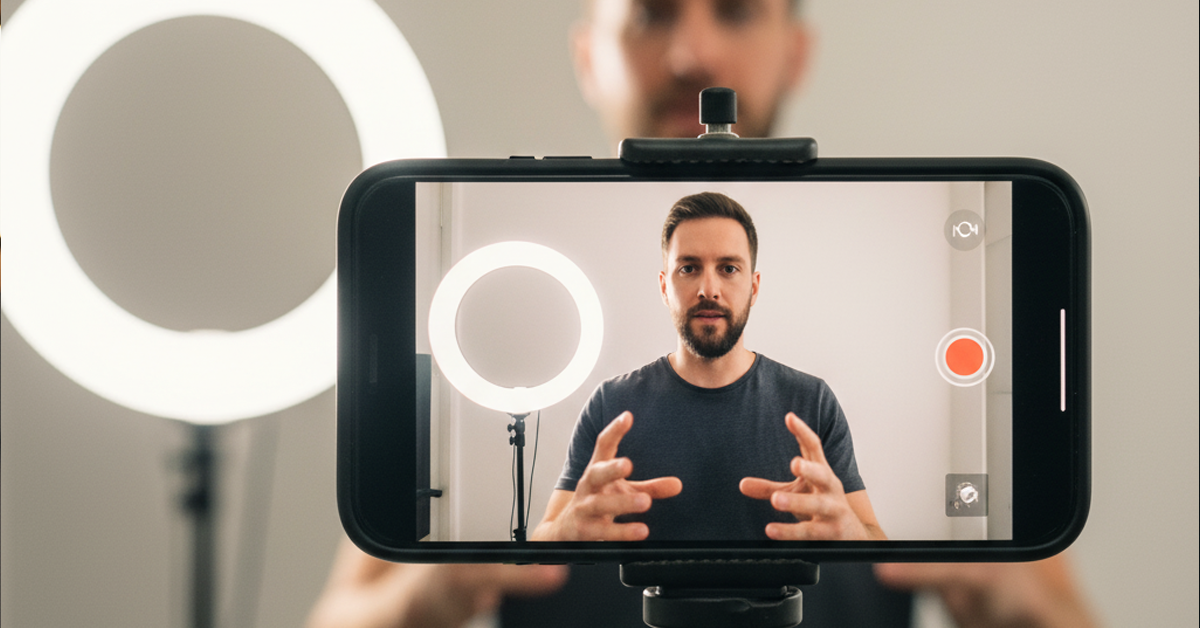
Ask any working actor how they manage their career right now, and you will hear some version of the same answer. Headshots are in a Google Drive folder. The demo reel is on Vimeo with a link they hope still works. The script came in an email buried under forty others. The reader is on FaceTime, and the recording is going to end up somewhere in a camera roll full of unlabeled clips.
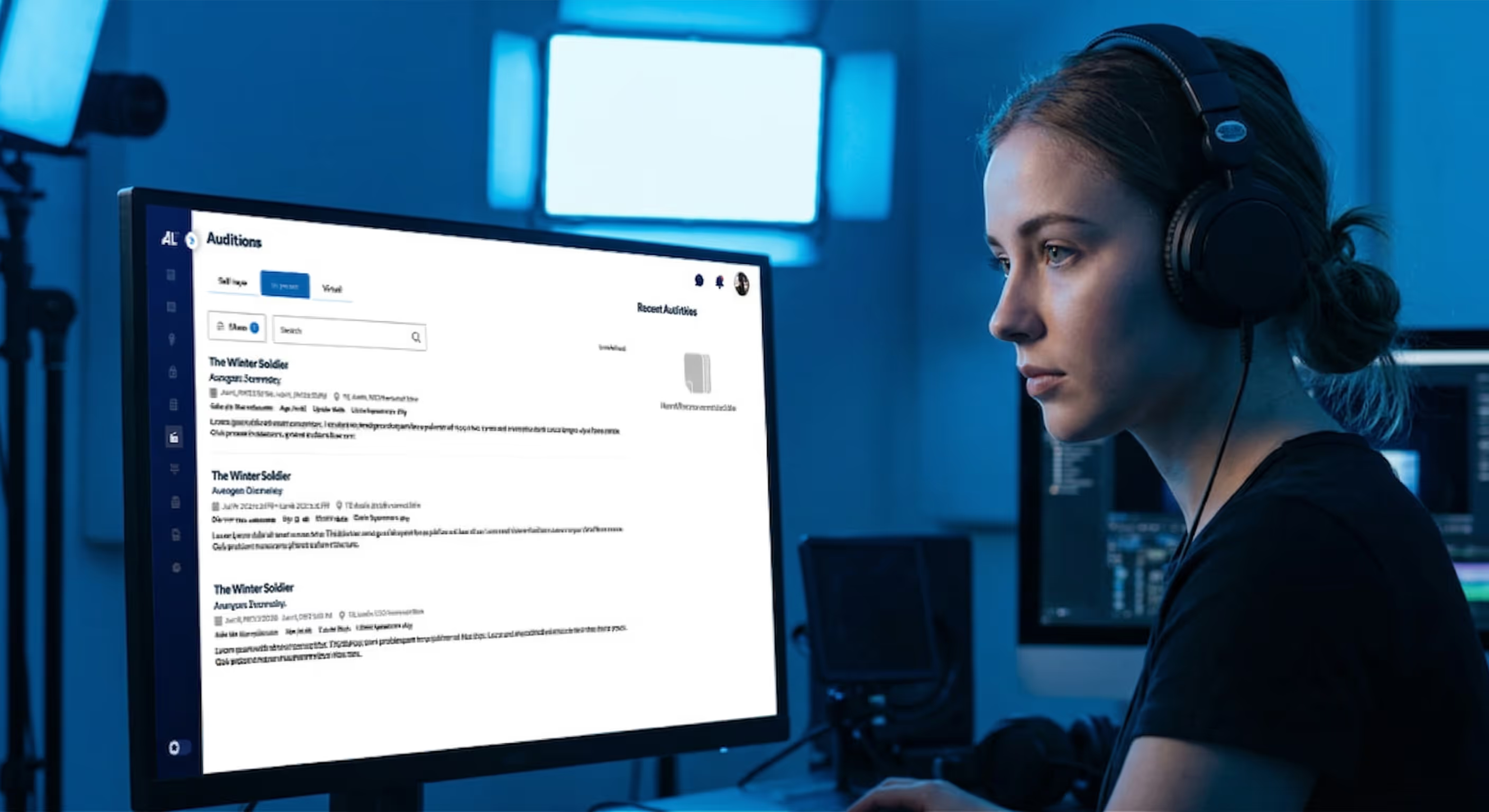
It works until the sides come in on a Tuesday afternoon and you spend twenty minutes finding the right version of the script and setting up a Zoom link instead of actually preparing for the scene.
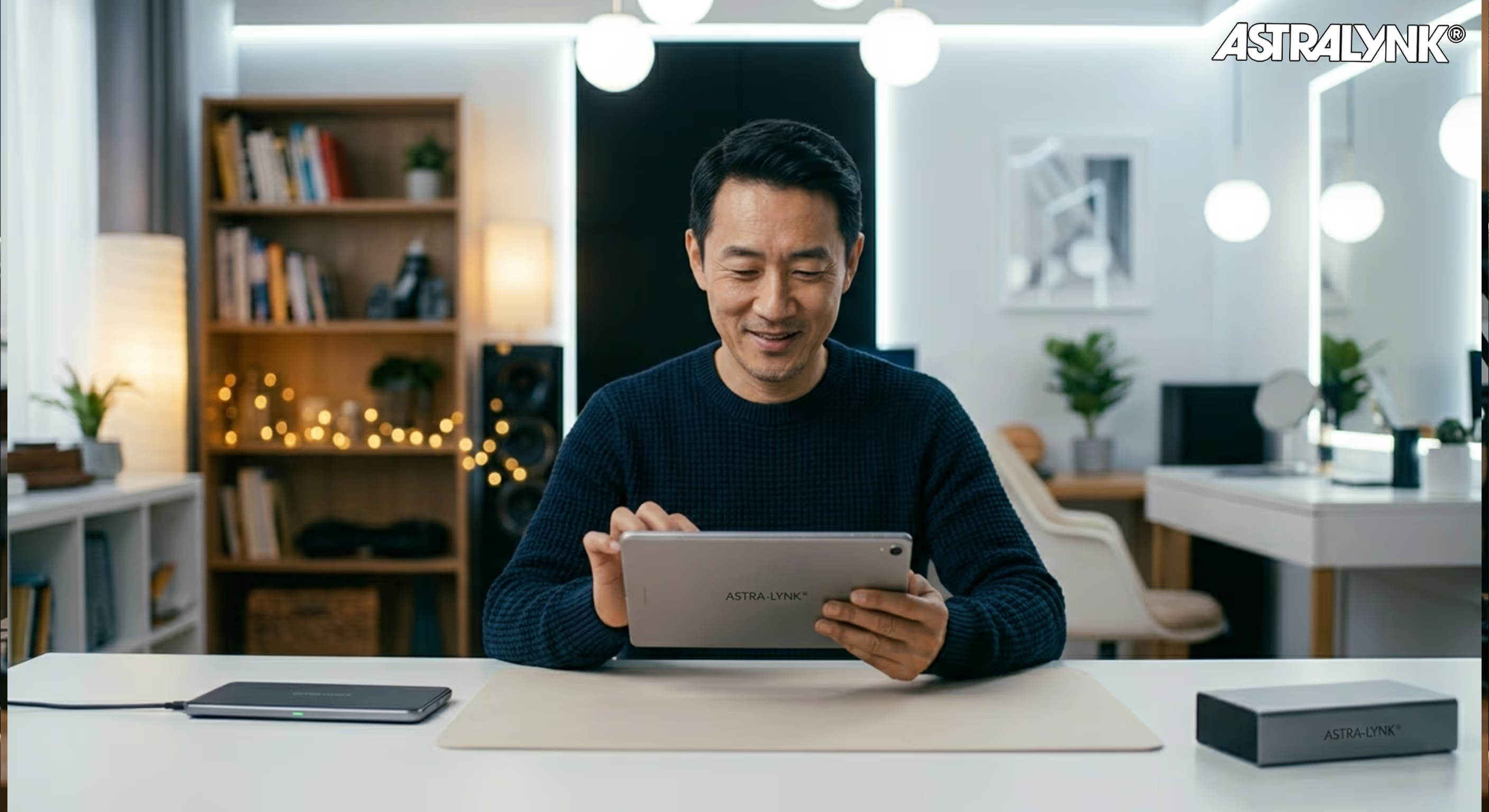
AstraLynk was built around one idea: everything a working actor needs to manage, prepare, and stay ready should live in one place. Not in five apps held together by copy and paste.
The App Problem Nobody Talks About
The fragmentation of an actor's workflow is one of those problems that feels like just the way things are. You learn to manage it. You build systems that sort of work. And then something slips through anyway, because the system depends on you remembering which app has what, which link is current, and which folder you saved that last self-tape in.
The cost is not always a missed opportunity. Sometimes it is just the forty minutes a week spent moving files around instead of running lines. Sometimes it is a rehearsal recording that never gets reviewed because finding it became its own project.
AstraLynk eliminates the fragmentation. The profile, the media, the scripts, the practice room, and the recordings are all connected because they were built to be connected from the start.
Your Profile Is the Foundation of Everything
Most actors have their materials in at least three places at once. The headshots are in a Google Drive folder they share on request. The reel lives on Vimeo or YouTube. The resume is a PDF that gets attached to emails, and nobody is quite sure if the version floating around is the most current one. When someone asks to see your materials, you are assembling them on the fly every single time.
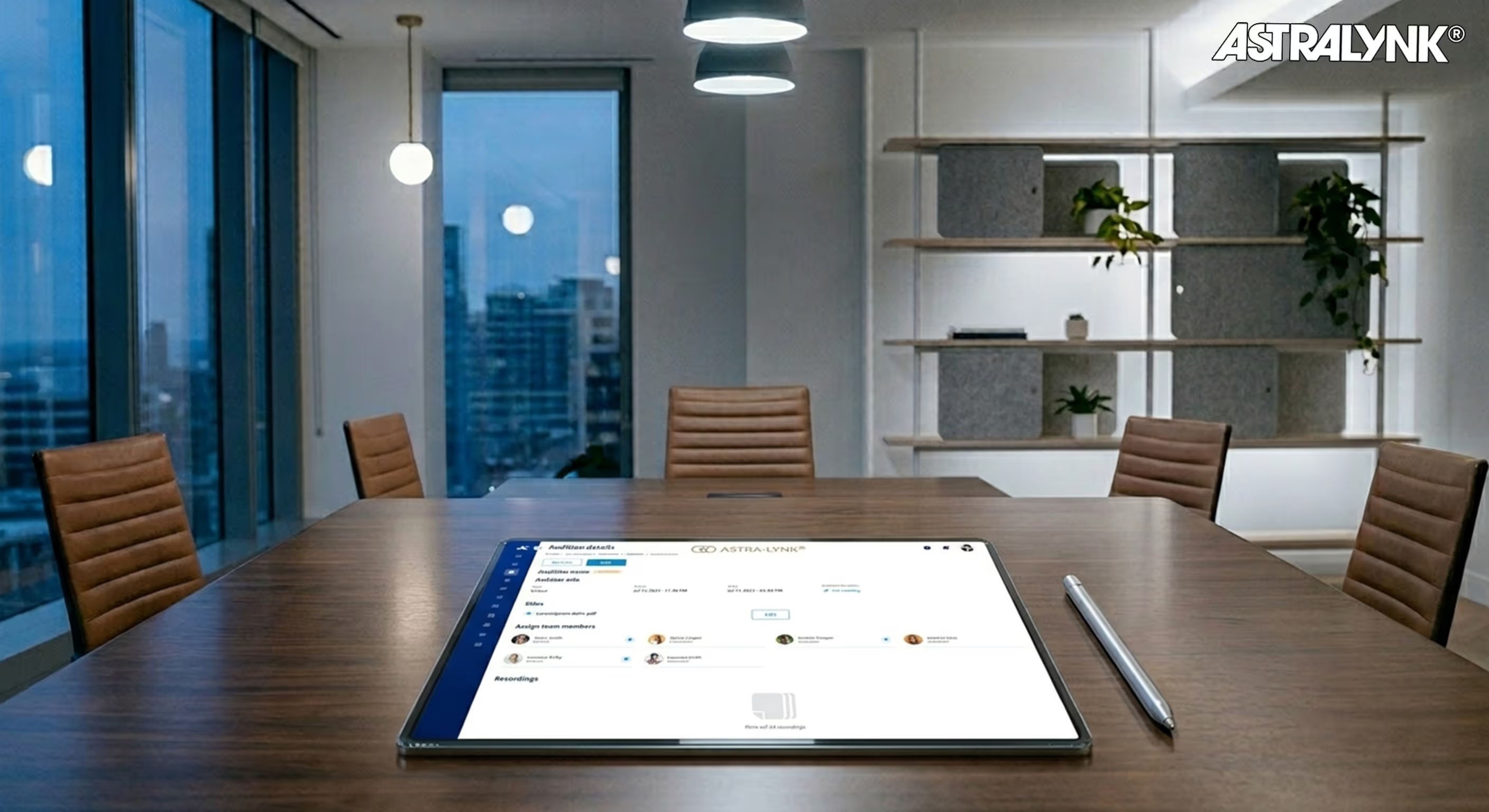
AstraLynk gives you a profile that holds all of it together. Your headshots, your demo reel, your resume, your physical attributes, your union status, and your working location. All of it in one place that you control and can update the moment something changes.
When someone needs to see your materials, you send them one link. Not three. Your profile is current because you own it, and everything on it reflects where you are right now.
The Script Is Already in the Room
Here is what typically happens when sides come in. You get a PDF in your email. You find a reader. You send them the sides in a separate message. You set up a Zoom call and share your screen so they can follow along. And if something changes in the script before your session, you start the whole chain over again.
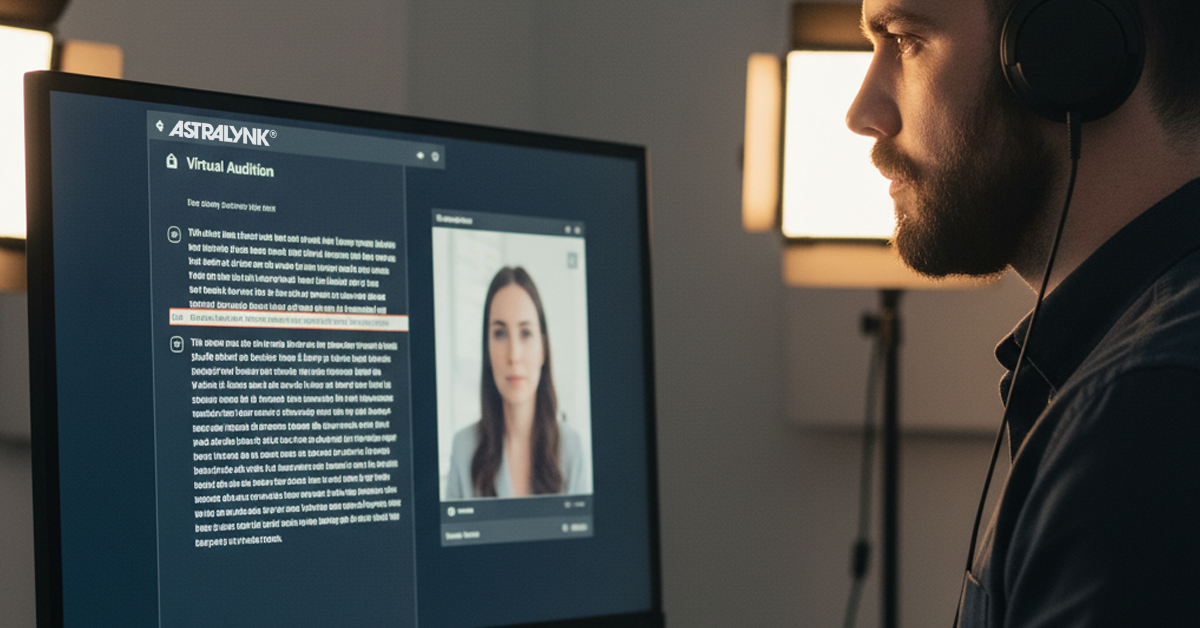
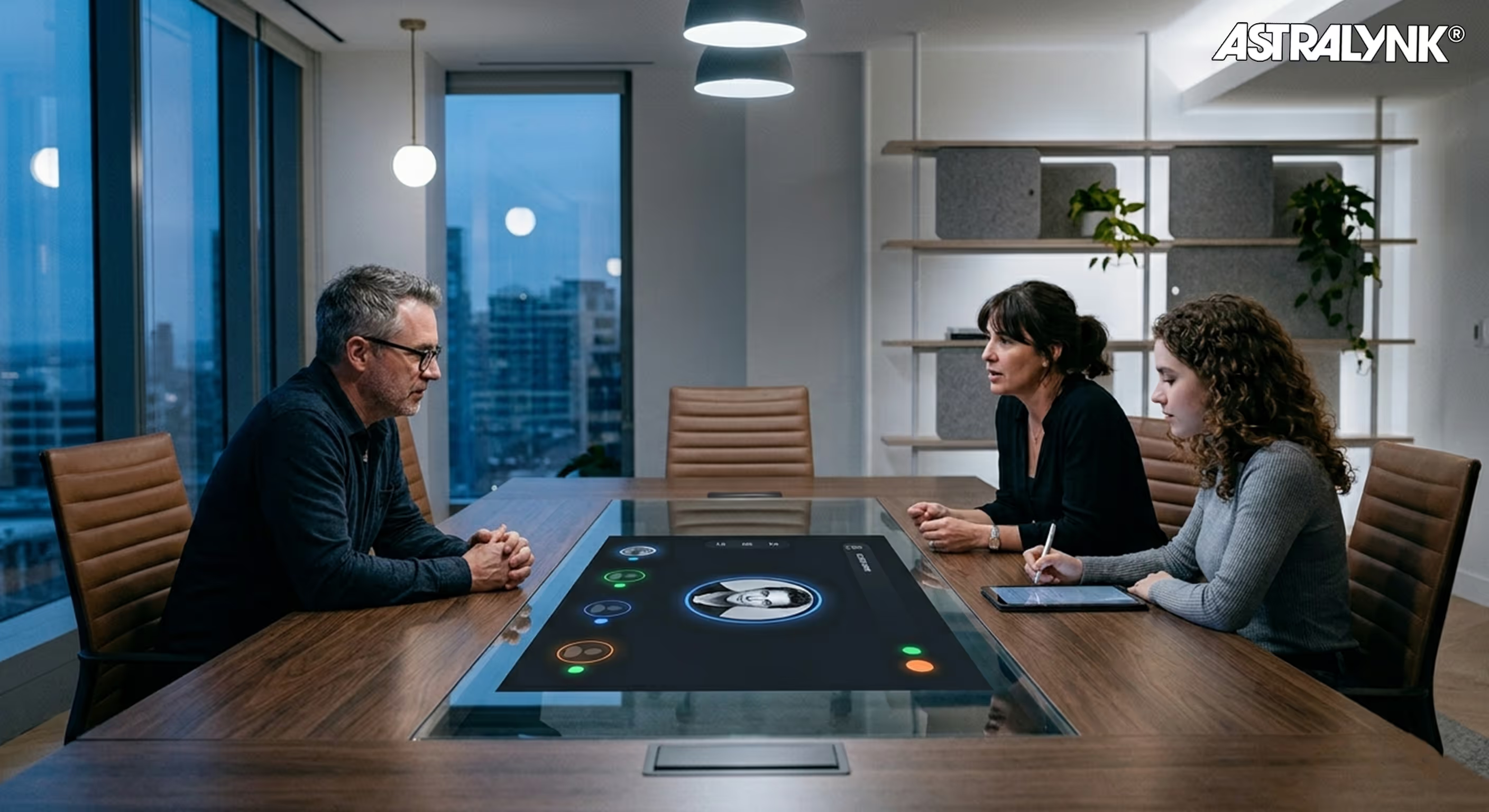
With AstraLynk, you upload your sides directly to the platform. When you start a Virtual Practice Room from those sides, the script is already there when your reader joins. You copy an invite link, send it to your reader, and the session starts with everything in place. No screen sharing. No separate file thread. No setup eating into the time you actually have to rehearse.
The sides live on the platform. The room is built around them. The session can start the moment both of you are ready.
Your Recordings Are Not Buried in Your Camera Roll
Recording a rehearsal on a general video call means recording the whole call. Your reader is in the frame. You get a file of a conversation, not a performance.
AstraLynk records you. When the session ends, your recording is already labeled and waiting in your Recordings section. Not in a camera roll full of videos from three months ago. Not in a cloud folder you have to remember to check. Right there, ready to review and ready to send, every time.
You can go straight from the session to reviewing your take without leaving the platform. No new tasks. No hunting. Just the work.
You Do Not Need to Wait for Someone to Be Available
Finding a reliable reader is one of the quiet frustrations of being a working actor. The person you usually call is busy. The class partner you like is in a different time zone. The sides came in late, and you need to run them tonight.
AstraLynk's AI Audition Assistant reads opposite you. Upload your script, select your scene, and the AI reads the other characters while you run your lines. You can rehearse at midnight, on a Sunday, in a hotel room between bookings. You do not need to schedule around someone else's availability to get a quality run-through of your material.
And when you do have a reader available, the Virtual Practice Room is there for both rehearsal and taping. You can shape the performance and record a take all in the same session, without switching apps.
Built for the Work, Not Around It
You open one platform. Your profile is there. Your scripts are there. Your practice room is there. Your recordings are there. When sides come in and you need to move fast, you are already set up.
For actors who have an agent or manager, AstraLynk connects that relationship too. Your representative can view your profile and stay current on your materials without you having to send updated files every time something changes.
The difference between AstraLynk and the collection of apps most actors are currently using is not a list of features. It is the experience of a workflow that does not get in the way. Not another app to manage. The place where the managing stops.
Final Thoughts
An acting career has always demanded more than talent. It demands organization, preparation, and consistency under pressure. The tools most actors are using right now make all three harder than they need to be.
AstraLynk is where that changes. If you are ready to stop working around your workflow and start working from one place built for this industry, AstraLynk is where that starts.

.avif)
.avif)
.avif)
.png)