.avif)
How Data Supports Modern Casting Workflows Without Replacing Creative Judgment

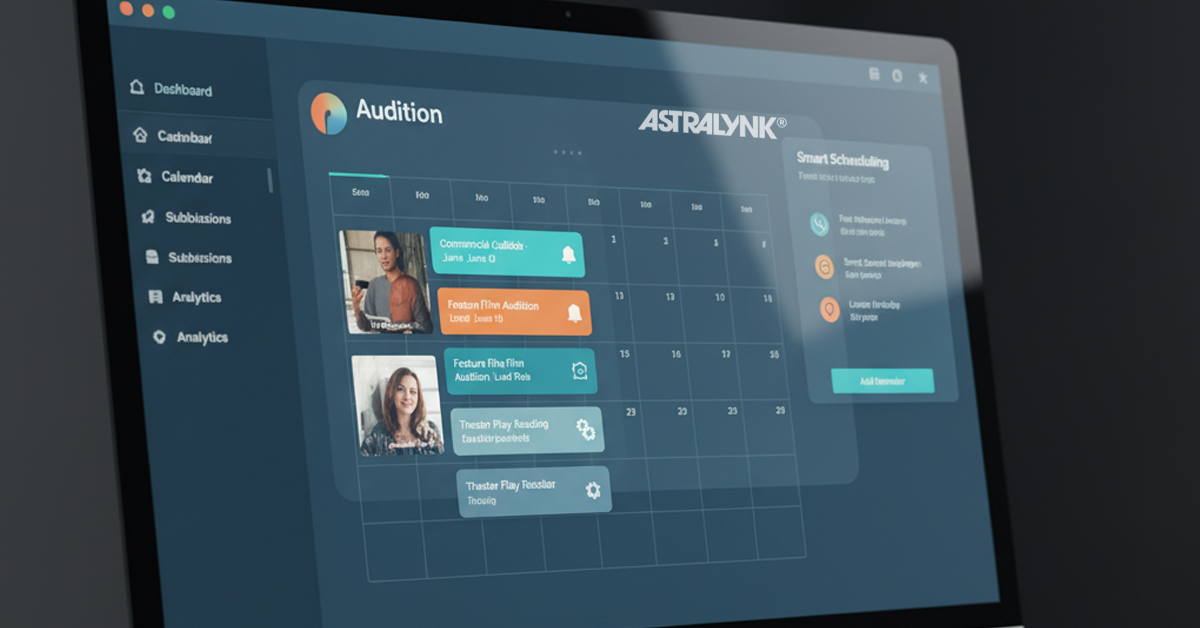
Casting has always depended on creative judgment, professional experience, and collaboration. As productions become more complex, however, casting teams also need better visibility into submissions, project status, and workflow coordination. Data now plays an important role in supporting those operational needs, not by identifying the "best" performers or predicting future success, but by helping teams organize information, track progress, and manage casting activities more efficiently. Platforms such as AstraLynk are designed to strengthen these workflows while keeping every creative decision firmly in human hands.
The Emergence of Casting Analytics in Talent Selection
Casting data has become increasingly valuable as productions manage larger submission volumes and more complex review processes. Rather than evaluating performances or replacing creative judgment, casting analytics can provide operational visibility into submission status, review progress, project timelines, and workflow activity. By organizing this information within a centralized environment, casting teams can spend less time managing administrative tasks and more time focusing on the performances themselves.
Leveraging Actor Performance Data for Deeper Insights
Throughout the casting process, productions generate a significant amount of project information, including submission records, audition status, scheduling updates, and review history. Organizing this information helps casting teams maintain continuity across projects, monitor workflow progress, and reduce administrative confusion. Rather than measuring an actor's artistic ability, structured data supports operational oversight so teams can manage casting activities more consistently and efficiently.
Studio Talent Tracking for Strategic Casting Decisions
Casting teams often need to reference materials from previous projects while coordinating current productions. Maintaining organized records of submissions, project participation, review history, and related documentation helps teams preserve context across multiple productions. This continuity supports smoother collaboration, reduces duplicated effort, and allows authorized stakeholders to locate relevant information without relying on fragmented systems or institutional memory.
Enhancing Collaboration Through Data Transparency
Shared access to organized project information helps casting directors, producers, and authorized collaborators work from the same context throughout the casting process. Centralized visibility into submissions, review status, and project updates supports clearer communication, reduces misunderstandings, and makes collaboration more efficient without influencing creative discussions or casting decisions.
Balancing Data with Creative Judgment
Creative judgment remains at the center of every casting decision. Factors such as performance, chemistry, interpretation, and a director's vision cannot be standardized or reduced to data alone. Digital tools are most valuable when they support the organization, coordination, and accessibility of information, allowing casting professionals to focus their attention on evaluating performances rather than managing administrative complexity.
Conclusion
Modern casting depends on both creative expertise and well-organized workflows. As productions grow in scale and involve more stakeholders, structured data helps teams maintain visibility into submissions, project status, and collaboration without influencing artistic judgment. AstraLynk supports this approach by providing secure infrastructure that organizes casting information, streamlines coordination, and helps professionals work more efficiently while preserving the human decision-making that defines the casting process.
Get started with AstraLynk today and create efficient, data-driven decisions and identify rising talent faster.





.avif)


.avif)


.png)